If you’ve looked into replacing your driveway recently, you’ve probably come across the term SuDS. It stands for Sustainable Drainage Systems, and understanding it can save you time, money and planning headaches.
The Problem SuDS Solves
The UK has a surface water flooding problem. Over the decades, millions of front gardens have been paved over with impermeable materials — concrete, block paving, tarmac — turning what used to be natural soak-away areas into hard surfaces that send rainwater straight into the storm drains.
The result? Overwhelmed drains, localised flooding, and water entering rivers and streams faster than the system can handle. In some parts of Cheshire, flash flooding after heavy rain has become a regular occurrence.
SuDS is the government’s framework for managing this. The principle is simple: let water soak into the ground where it falls, rather than channelling it into the drainage system.
What Does SuDS Mean for Homeowners?
Since 2008, the planning rules in England have required that any new hard surfacing on a front garden over 5m² must either:
- Use a permeable surface that allows water to drain through, or
- Direct rainwater to a permeable area within your property (like a lawn or rain garden)
If you don’t meet one of these criteria, you need planning permission.
Why Resin Bound Is Naturally SuDS-Compliant
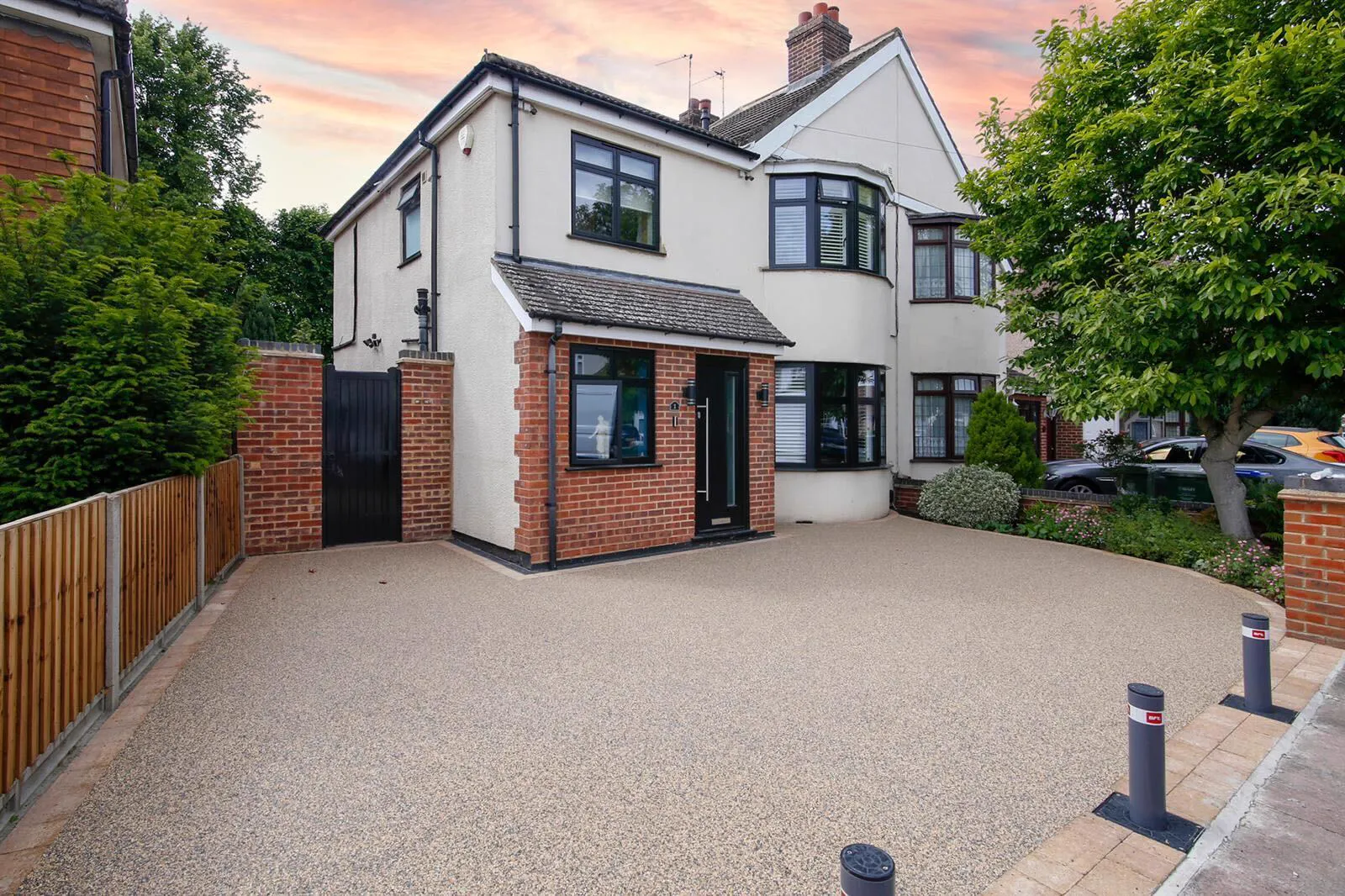
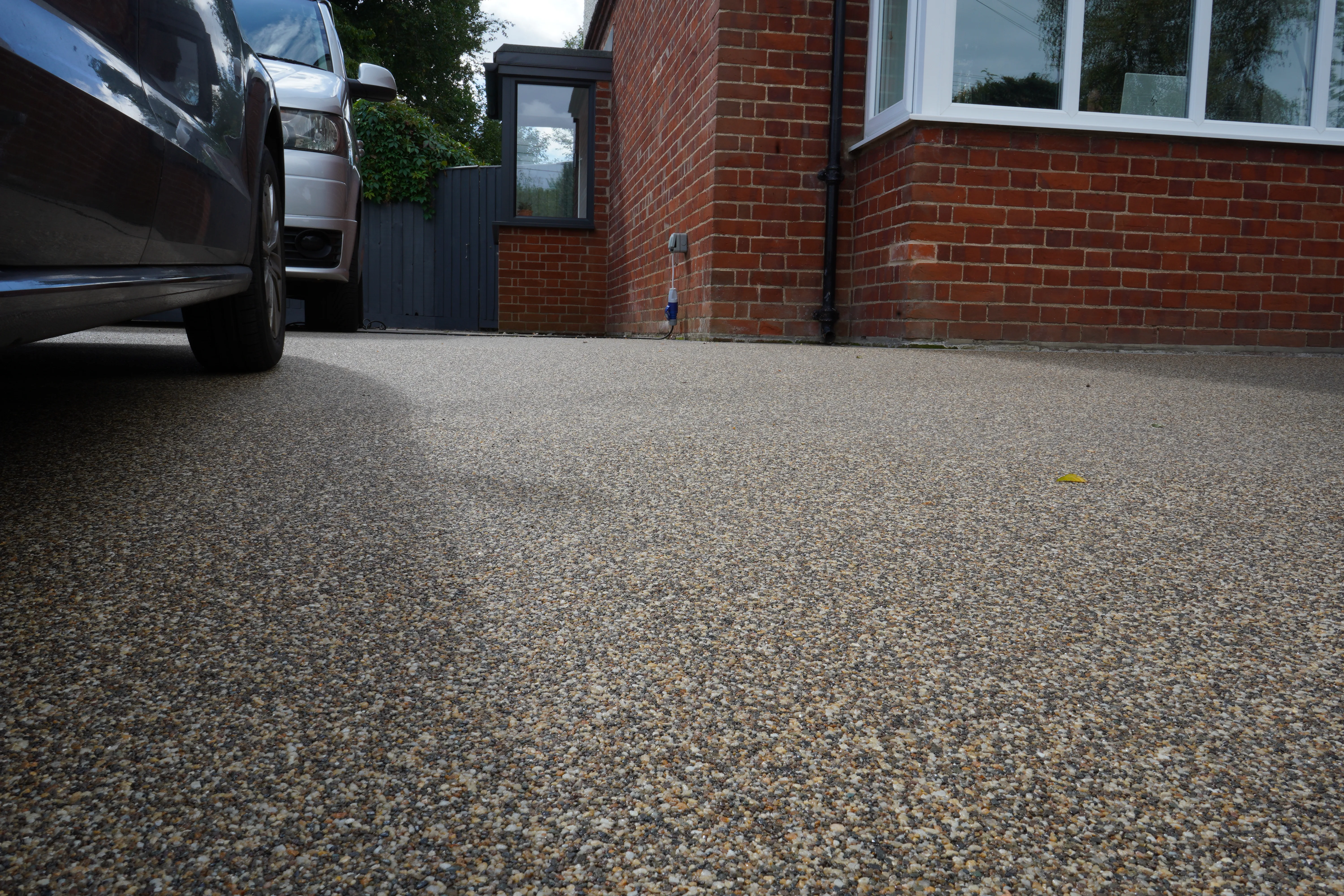
This is one of resin bound’s biggest advantages. The surface is made up of individual aggregate stones coated in resin and trowelled smooth. Between each stone, tiny gaps remain that allow water to pass straight through into the sub-base below.
A properly installed resin bound driveway can drain up to 850 litres per minute per square metre — far exceeding any realistic rainfall. Even in a Cheshire downpour, water disappears into the surface instantly.
How the Sub-Base Works
The permeable surface is only half the story. Underneath, the sub-base needs to be designed to handle the water too:
- Open-graded aggregate (typically MOT Type 3 or clean 20mm stone) allows water to pass through the base layer
- Geotextile membrane separates the base from the soil below, preventing silt migration while allowing drainage
- On clay-heavy soils (common in parts of Cheshire), we may install additional drainage channels at the base to direct water away
This is why proper groundwork preparation matters so much. A resin surface on top of a poorly draining base won’t perform as intended, regardless of how permeable the surface layer is.
SuDS vs Other Driveway Materials
- Resin bound — fully permeable, SuDS-compliant by default
- Block paving — semi-permeable through the joints, but weeds and moss block drainage over time
- Tarmac / concrete — impermeable. Requires separate drainage or planning permission
- Gravel — permeable, but migrates, creates ruts, and is difficult with wheelchairs and pushchairs
- Resin bonded — not permeable. Requires planning permission for front driveways over 5m²
The Real-World Benefits
Beyond compliance, a SuDS-compliant driveway is genuinely better to live with:
- No puddles — water drains instantly, so no standing water in winter
- No ice sheets — because water doesn’t pool, the risk of dangerous ice is dramatically reduced
- No planning permission — saves time and the £260+ application fee
- Future-proof — as regulations tighten (and they will), a permeable driveway is already compliant
What We Do at ResinPro
Every ResinPro Cheshire installation is designed to be SuDS-compliant from the ground up. We assess soil conditions, design the sub-base appropriately, and install Vuba resin bound surfaces that drain far beyond what’s required. It’s not an add-on — it’s built into every job.
Want to know more about how we’d approach your driveway? Book a free survey and we’ll walk you through everything on site.